
By Lola Adeyemo
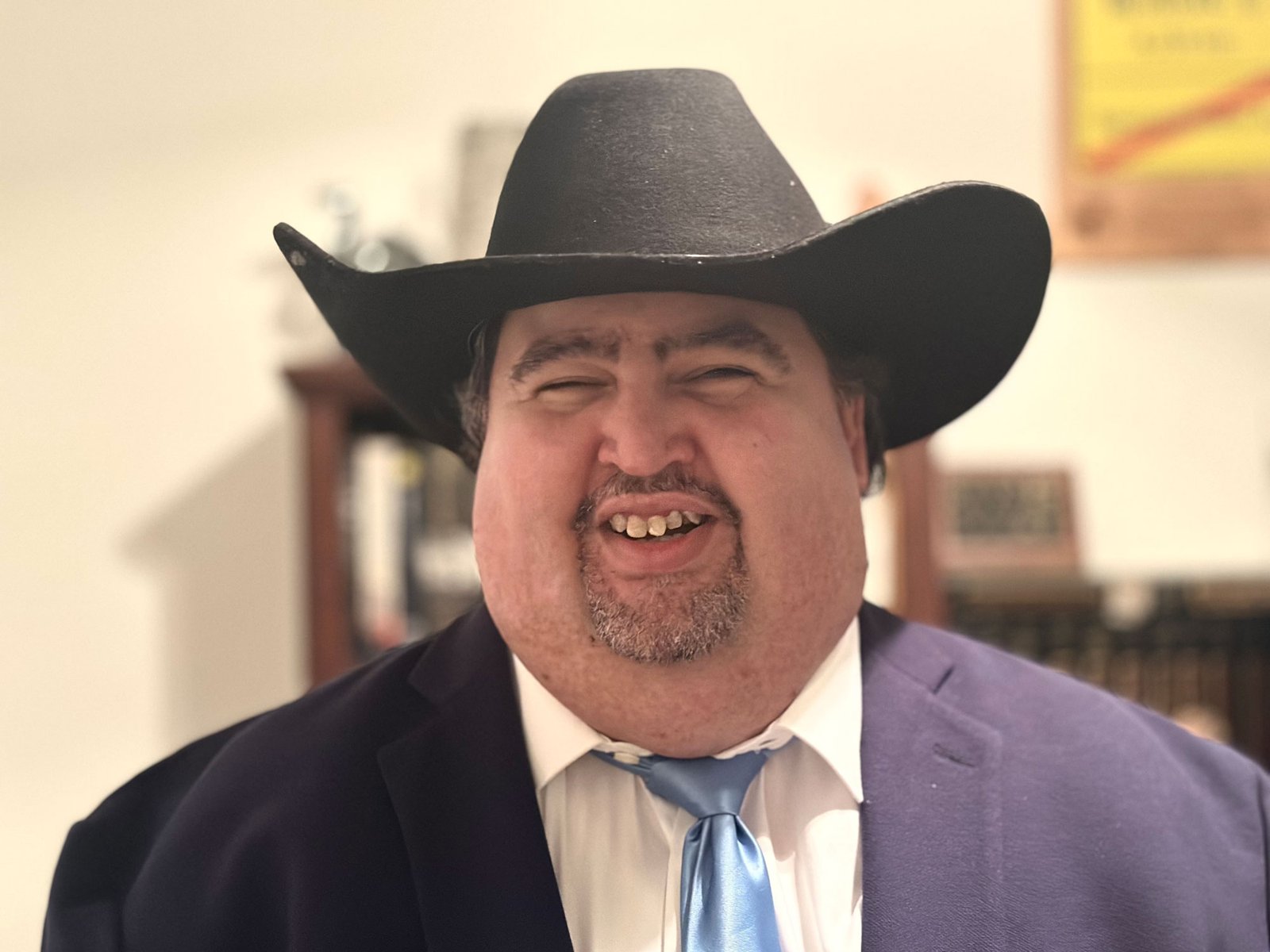
Daniel Hodges is a white guy with multiple advanced degrees. He is also someone who missed five years of school, fought for custody of his children as a blind parent, and founded a nonprofit from the tail end of a mental health crisis — while in law school.
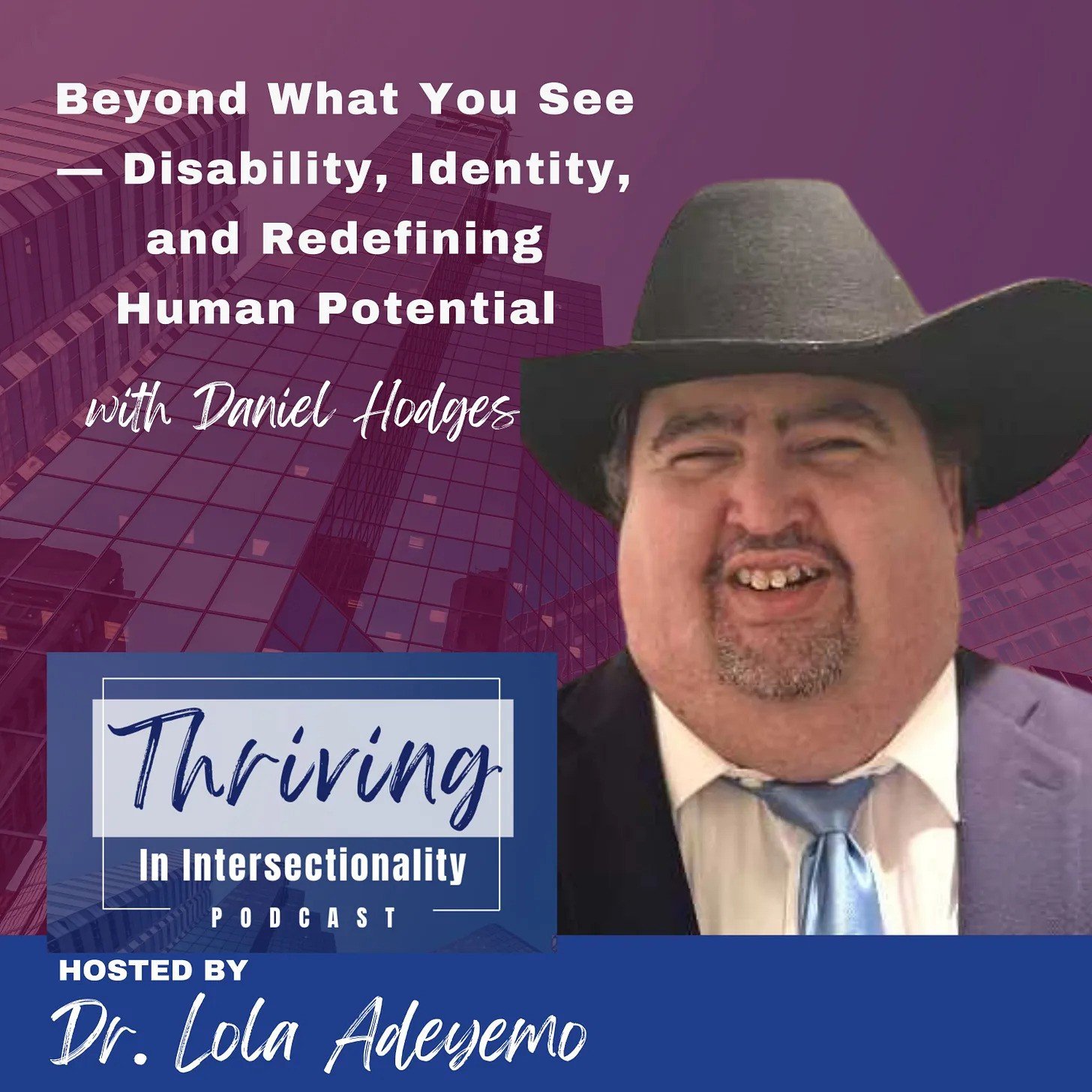
There is a reflex most of us have when we hear someone’s credentials before we hear their story. We fill in the blanks. We construct a life that makes sense around those credentials. When Dr. Lola Adeyemo introduced Daniel Hodges on this podcast episode — JD, MHA, founder, thought leader — a certain picture probably formed in your mind.
That picture was almost certainly wrong.
That gap — between the image we form and the life someone actually lived — is the whole territory this podcast exists to explore. And Daniel’s story maps it with unusual precision.
“I understand food stamps. Trusts never occurred to me.”
He said this almost in passing, describing what he blurted out during property class in law school when the topic of trusts and estates came up. It’s the kind of line that lands quietly and then keeps landing. Because it’s not about shame. It’s about the simple fact that the map of the world you’re given growing up depends entirely on where you started — and not everyone starts with the same map.
The disability you see and the ones you don’t
Daniel is blind. That’s what most people notice first, and it’s the disability they base their assumptions on. What they don’t see — what he carries invisibly — is chronic pain from a connective tissue disorder that dislocates joints in his sleep, and anxiety that has, at different points in his life, made it hard to remember his own name.
70% of the struggles blind individuals face are rooted in inaccessibility and bias — not vision loss itself
95% of the web is partially or fully inaccessible to people using assistive technology
That 70/30 split is the number that stayed with me after this conversation. We tend to think of disability as something internal — a limitation that lives in the person. But Daniel reframes it clearly: most of what makes life harder as a blind person is not blindness. It’s a world that wasn’t designed with him in mind, and a culture that insists it already knows what he can do.
He knows what it’s like to be denied a job he was more than qualified for. He knows what it’s like to have a hospital question whether a blind person can parent. He knows what it’s like to call his teenage son into the next room because a button on a software platform wasn’t properly labeled — and he needed to turn on his microphone before recording this very podcast.
That last one is small. It is also exhausting to carry day after day.
Missing grades 7 through 11
Here is what Daniel’s educational journey actually looked like: growing up in rural Ohio, where nobody knew how to support a blind student. Relying entirely on memorization because the right materials weren’t available. Being placed in homeschool for grades 7 through 11 — which, in practice, meant those years largely didn’t happen educationally. Getting a GED. Failing out of college the first time because he didn’t yet know how to advocate for himself or access mental health accommodations. Starting over at a different school with two classes, while two of his children went through cancer treatment.
He eventually graduated in his early 30s. And then — because two mentors he trusted both challenged him within 48 hours of each other — he went to law school in Baltimore on a scholarship. He had two surgeries during those years. He nearly lost the use of his right hand for the better part of a year.
He graduated anyway.
“I needed a why that was powerful enough to get me out of bed in the morning, even when my pain is at a seven or eight.”
“Peaces” of me — and why it’s spelled that way
The foundation Daniel co-founded with his cousin Christy was born in her living room in Phoenix, between his first and second year of law school, during the tail end of a pretty severe mental health crisis.
They landed on something that felt true: underneath all the different diagnoses and differences, there was a shared cultural assumption doing the damage — the idea that some bodies are valuable and some aren’t. That some people are whole and some are missing something.
That assumption is what Peaces of Me sets out to dismantle. The name is spelled P-E-A-C-E-S deliberately. Not pieces — as in missing a piece. Peaces — as in what becomes possible when you stop treating difference as deficit.
What you’ll hear in this episode
- Why 70% of the struggles blind individuals face are rooted in bias and inaccessibility — not vision loss
- What it actually looks like to navigate education systems that weren’t designed for you
- How chronic pain shaped Daniel’s career decisions — and his definition of purpose
- Why accessibility and inclusion are not a department or a benefit — they’re a design question
- What happened when a hospital questioned whether a blind person could be a parent
- How Peaces of Me approaches change without blame, shame, or guilt-tripping
- What employers get wrong about the tradeoff between accessibility and merit
For the employers listening
Daniel saved something direct for the end. The idea that accessibility costs you something — that inclusion means lowering the bar — is not just wrong, he says. It’s a lie. A flat-out lie, his words, backed by a mountain of evidence he’s happy to walk through with anyone willing to sit down and have that conversation.
The best team isn’t built by filtering people out. It’s built by designing systems that don’t require people to overcome them first.
Listen to the full conversation
What you see is not all there is — with Daniel Hodges, JD, MHA
The full episode is embedded below. Press play and hear it in Daniel’s own words.
Daniel Hodges, JD, MHA
President & Co-Founder, Peaces of Me Foundation
Daniel is a thought leader on accessibility and authentic disability inclusion. He helps organizations build solutions that are sustainable, practical, and human-centered. Learn more at peacesofme.org.
About the podcast & host
Dr. Lola Adeyemo is the CEO of EQI Mindset and founder of the nonprofit Immigrants in Corporate Inc. She is an author, speaker, and workplace inclusion strategist who works with organizations to build communities of belonging through strategy, storytelling, and systems change. She is also a mom who has been growing her own understanding of disability and neurodivergence — personally and professionally — and brings that ongoing learning into every conversation she hosts.
Thriving in Intersectionality explores how identity, lived experience, and leadership intersect in today’s workplace. Each episode invites guests to define intersectionality in their own words — and reflect on how their layered identities shape the way they lead, navigate systems, and create impact. Because belonging isn’t a bonus. It’s the catalyst for real growth.