


By Adam Stone
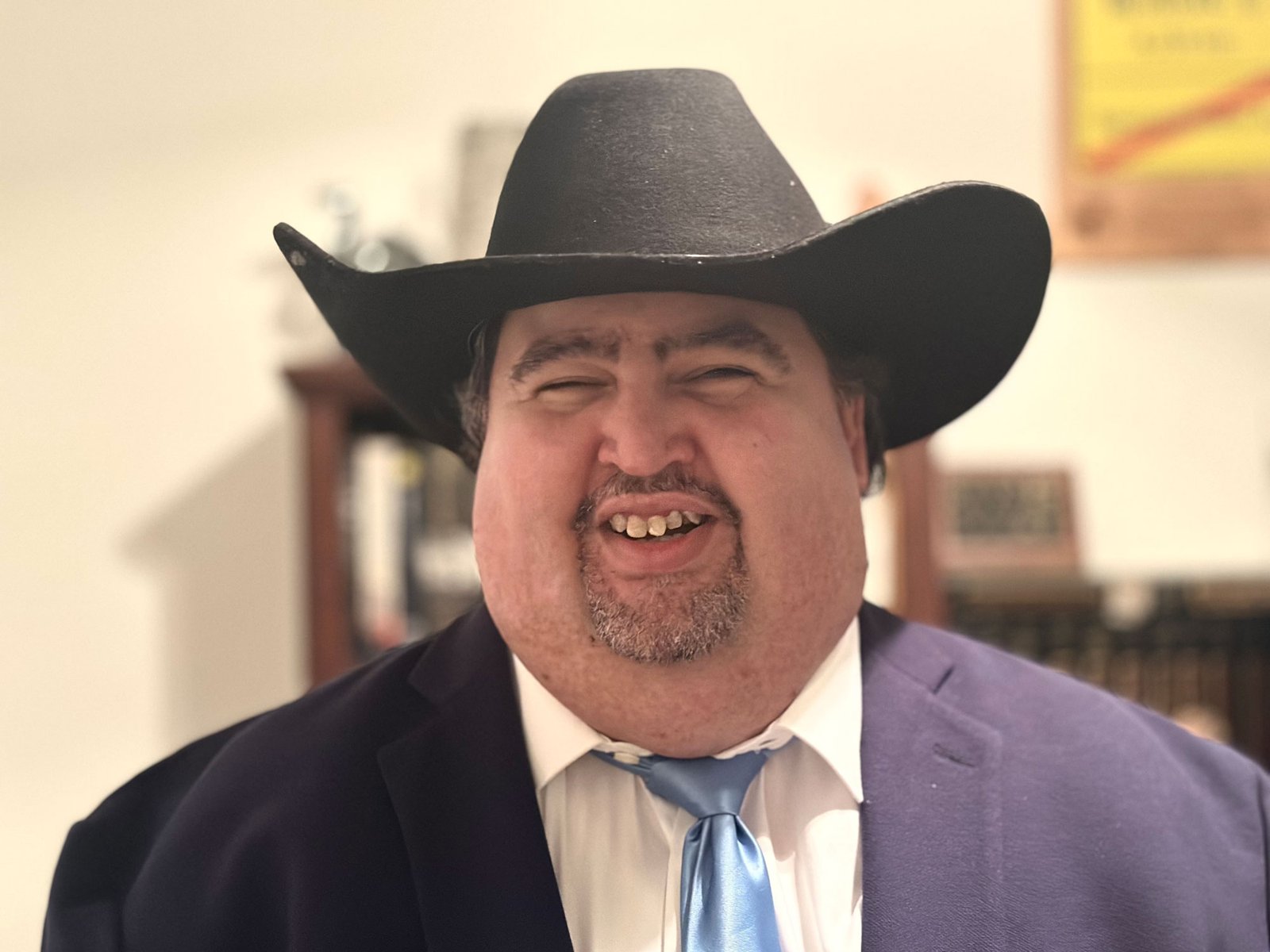 In the world of disability advocacy, Daniel Hodges describes himself as a peacemaker.
“Businesses want to offer their goods and services to the broadest customer base possible. And the customers with disabilities want to be able to transact business,” he says. “It’s all about finding the friction that shouldn’t be there, and helping both sides eliminate that friction.”
It should come as no surprise that the advocacy organization he co-founded is called the Peaces of Me Foundation.
Blind from birth, and living with a connective tissue disorder called Ehlers Danlos syndrome, 41-year-old Hodges wears multiple hats. In addition to serving as president of the foundation, he’s a business development executive in The C-Suite Network, a professional-development community. He serves on the board of advisors of StationMD, a physician service supporting those with disabilities.
More? Sure! Hodges also is a strategic consultant with Real Life Access, a business promoting digital accessibility, and he’s director of partnerships at management consulting firm SA Consulting.
What motivates him to fight through the physical challenges to continue this work?
“When I was in my early 30s, I saw people my age falling out of the workforce left and right with these medical conditions,” he says. “For the ones who were able to stay working, it wasn’t about what they did for a living, it was about whether they had a job or a calling that was powerful enough that it helped them get out of bed in the morning, even on the worst pain days.”
He’s organized his professional life on that principle. “If I take on the projects that are really motivating for me, that increases my capacity to go out and do these things,” Hodges says.
That personal connection to the work helps to drive success, says Fred Brown, professor of law and director of the graduate tax program at UBalt Law. “It’s all lived experience: He’s lived as a disabled individual for almost his entire life, and he is incredibly articulate,” says Brown, who also serves as a board member at Peaces of Me.
With no background in disability, “at first I was a little reluctant to join the board, but he just made a powerful case,” Brown says. “He’s a very convincing individual, and it comes from his incredible sincerity.”
Even with that sincerity, this work can be challenging. “The hard part is getting people to understand what kind of advocacy I do,” says Hodges, who lives near Houston, TX. Again: It’s about peace-making. While the political landscape tells an adversarial story — the right says there’s too much accommodation, the left says there isn’t enough — Hodges seeks a middle ground. “Let me compete in an arena free of bias and barriers, and may the best candidate win. I want a fair and reasonable chance to earn what I’m capable of. I don’t want a handout.”
Karyn Schulz says Hodges is well-suited to make that case. As director of the UBalt Office of Disability and Access Services, she assisted him during his legal studies, and went on to serve on the Peaces of Me board herself.
“He wants people to learn,” she says. “He’s not high and mighty, not one of those militant folks: You will do this because it’s the law. He really brings people into the conversation.”
A natural question arises: Why would a peacemaker want to train in the inherently adversarial profession of law? “I had the same question,” Hodges says. “I don’t like arguing with people.”
But he found there’s more to law than litigation. There are alternative dispute resolution and mediation. More to the point, he says, “I’m able to use that legal knowledge to help others understand how the law works.” And the legal training itself “helps me to dissect the different arguments from different perspectives, to look at things on a deeper level.”
He brings that deeper-level approach to his advocacy work. When a national landscape-architect certifying organization asked Peaces of Me to create a service project for its members, Hodges counter-offered with an educational opportunity. He took the landscape designers to a park, to demonstrate personally what accessibility looks like.
“We had about 50 people out there touring this park with us, and more the next day in a 90-minute Q&A,” he says. “We said: Let’s put our heads together and start elevating this conversation.”
To further his work, Hodges now is pursuing a master’s degree in health care administration at Western Governors University. He credits UBalt with helping to launch his career, and applauds its proactive stance on disability.
“When I started there, there was one other blind student, and we were the first blind students that most of the professors or administrators had ever dealt with on that level,” he says. “We all worked together to make it a better experience, not just for us, but for every student that comes after us.”
Adam Stone is a writer based in Annapolis.